Inilathala ang pahayag na ito sa Ingles. Ipinapakita ito sa orihinal nitong pananalita.
DOES EARNING JUST OVER ₱96 A DAY MEAN THAT A WORKER IS NO LONGER POOR?
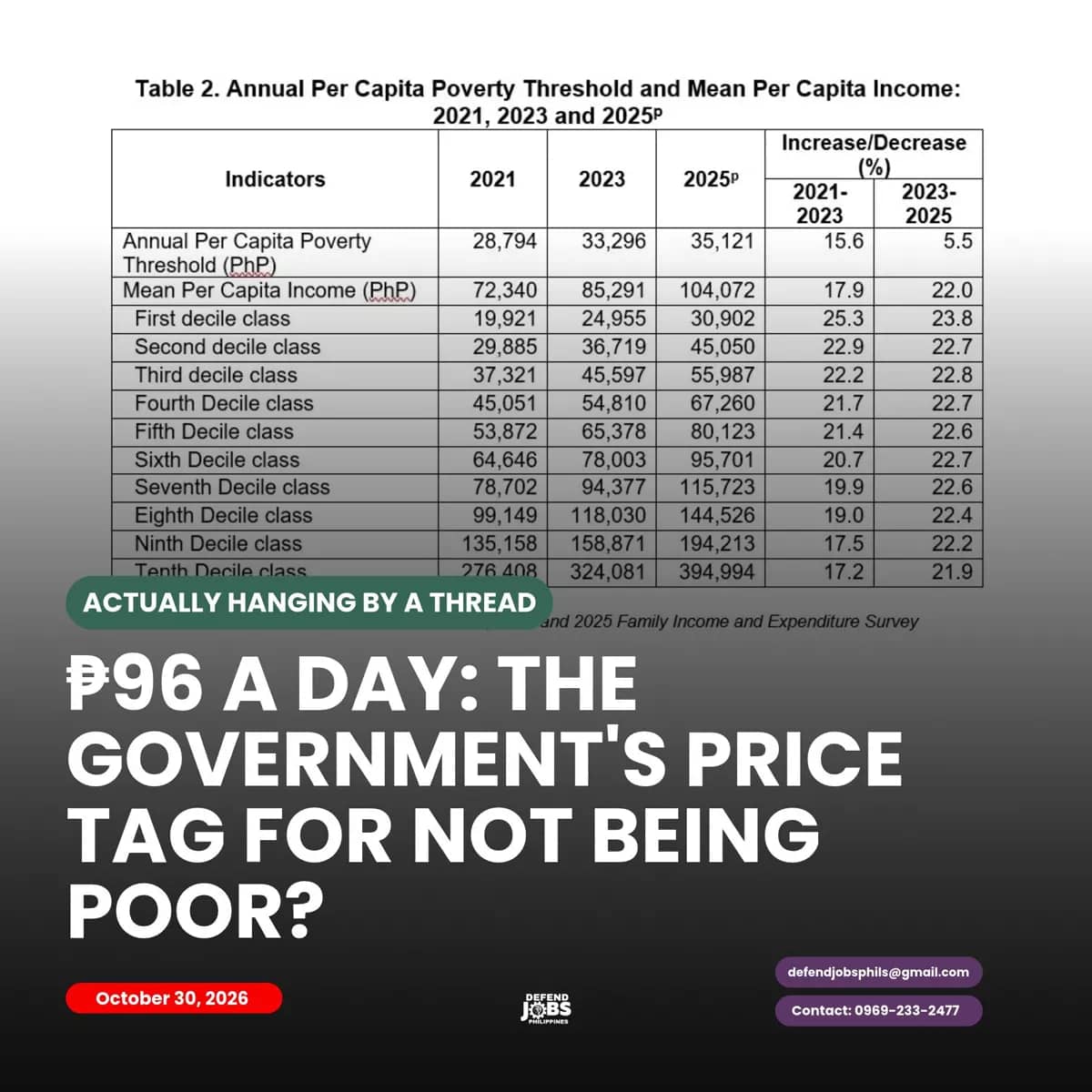
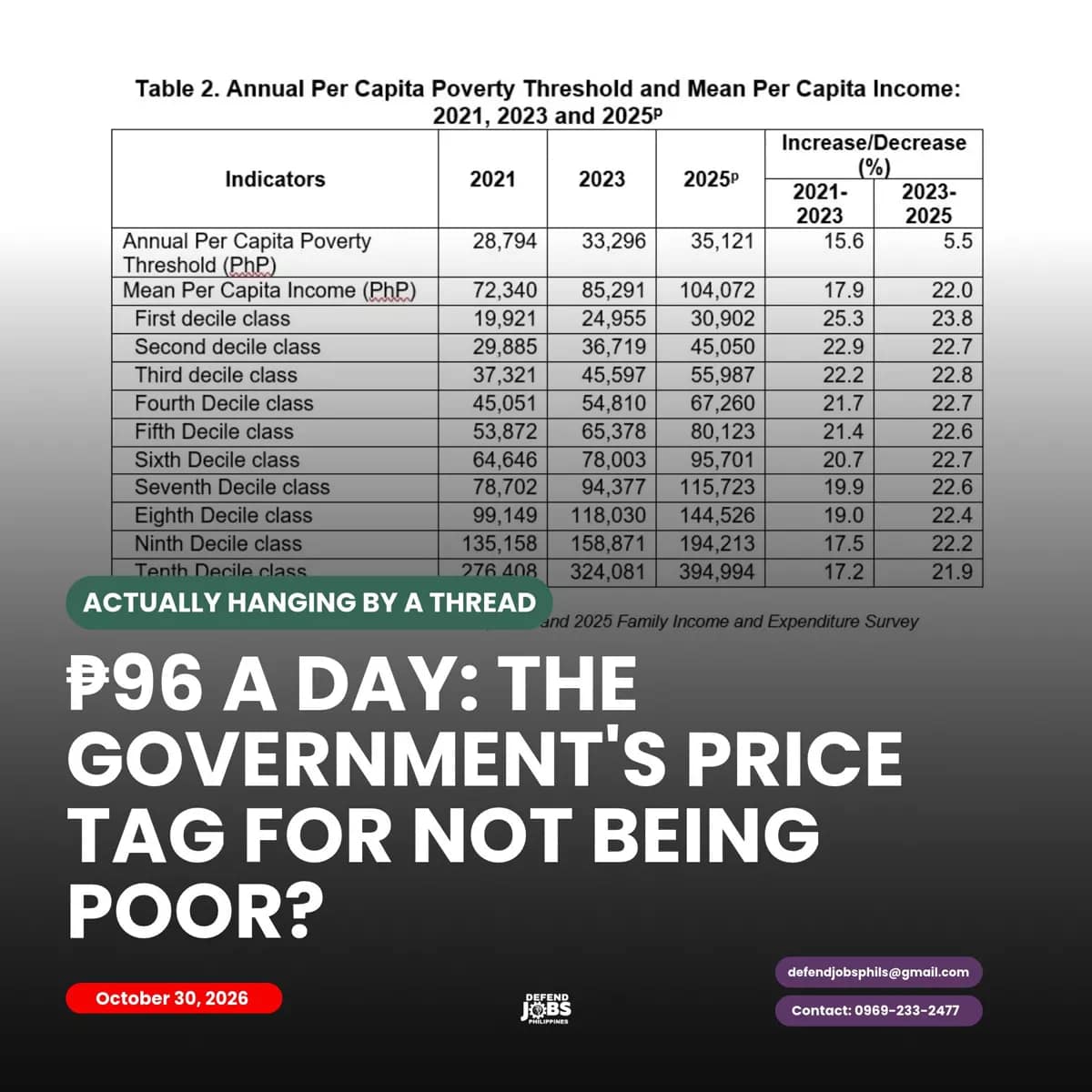
The Philippine Statistics Authority (PSA) reported on August 21 that the country’s poverty rate declined from 15.5% to 9.7% in 2025. According to the agency, an estimated 6.5 million Filipinos have supposedly risen above the poverty line.
Based on the PSA's latest figures, the annual per capita poverty threshold stands at just ₱35,121, or approximately ₱96.22 per person per day. This means that a person whose annual income falls below this amount is officially considered poor. For a family of five, the corresponding national average poverty threshold is ₱14,634 per month.
But how can millions of Filipinos be considered to have escaped poverty when workers continue to struggle to afford even their most basic needs?
Does earning just over ₱96 a day mean that a worker is no longer poor?
Can such an amount possibly provide enough food on the table, cover rent, electricity, water, transportation, and meet the other needs of their family?
Clearly, earning just above the official poverty threshold does not mean a family has overcome poverty. With the continued rise in the prices of basic goods and services, workers earning meager wages remain financially strained. Many are forced to cut back on food, take on debt, and stretch their already insufficient income just to get through each day.
Being officially classified as “non-poor” should not be mistaken for having a decent standard of living. Simply crossing the poverty threshold does not mean workers have sufficient wages, secure employment, or the means to provide for their families.
A decline in the number of people classified as poor means little when workers remain hungry, buried in debt, and uncertain about their livelihoods. The government cannot claim economic progress by relying on an artificially low poverty threshold while continuing to deny workers the wages and working conditions they need to live with dignity.
Workers must not settle for statistical claims that do nothing to change their daily realities. We must demand what is rightfully ours: substantial wage increases, secure employment, affordable basic goods, and accessible social services. These are not privileges to be granted at the government's convenience, but fundamental rights that workers must continue to assert and fight for.
The real measure of progress is how many can finally afford to live decently. It is time for workers to unite, organize, and collectively fight for living wages and decent jobs. No worker should have to endure hunger, debt, and insecurity just to survive.